Budgeting doesn't have to be complicated. The 50/30/20 rule is a simple yet powerful budgeting framework that can help South Africans take control of their finances, regardless of income level. This straightforward approach divides your after-tax income into three clear categories, making it easier than ever to manage your money effectively.
What is the 50/30/20 Rule?
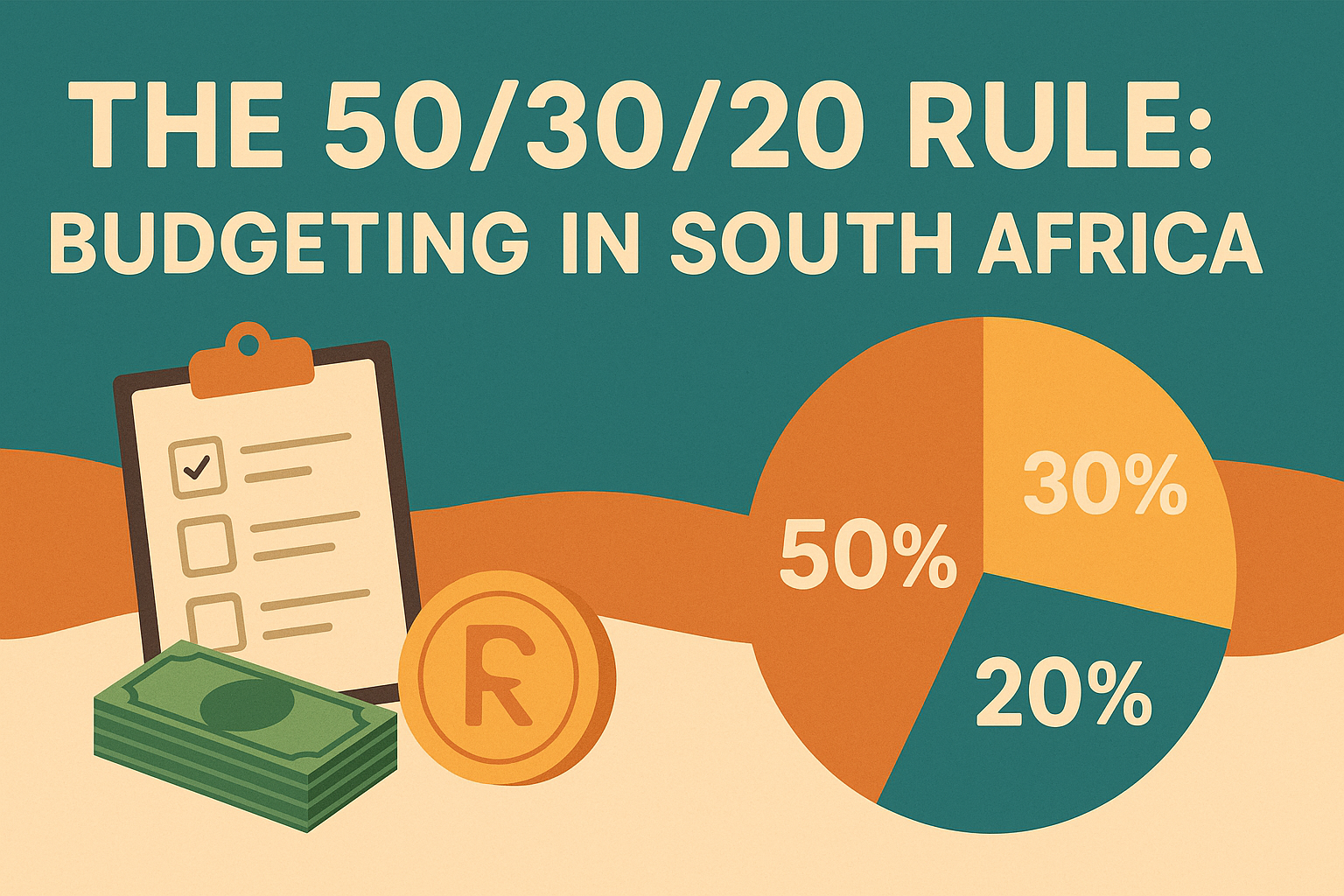
The 50/30/20 rule is a budgeting method that allocates your after-tax income into three categories:
- 50% for Needs: Essential expenses you can't avoid
- 30% for Wants: Lifestyle choices and entertainment
- 20% for Savings and Debt: Building wealth and paying off debt
This rule was popularized by Senator Elizabeth Warren and provides a balanced approach to spending that ensures you're covering essentials while still enjoying life and securing your financial future.
Breaking Down the Categories for South African Living
50% for Needs (Essential Expenses)
Your "needs" are expenses you must pay to maintain your basic standard of living. In the South African context, these typically include:
- Housing: Rent, bond payments, rates and taxes, property insurance
- Utilities: Electricity, water, gas, refuse collection
- Transportation: Car payments, petrol, public transport, car insurance and maintenance
- Groceries: Essential food and household items
- Insurance: Medical aid, life insurance, short-term insurance
- Minimum debt payments: Credit cards, personal loans, store accounts
- Cell phone: Basic communication needs
If your needs exceed 50% of your income, you may need to look for ways to reduce these expenses or increase your income. Consider moving to a more affordable area, finding a cheaper car, or switching to a more cost-effective medical aid option.
30% for Wants (Lifestyle and Entertainment)
The "wants" category covers everything that enhances your quality of life but isn't essential for survival. For South Africans, this might include:
- Entertainment: Movies, concerts, sports events, streaming services
- Dining out: Restaurants, takeaways, coffee shops
- Hobbies: Gym memberships, sports equipment, books, gaming
- Travel: Holidays, weekend getaways, visiting family
- Shopping: Non-essential clothing, gadgets, home décor
- Social activities: Braais with friends, club memberships
- Personal care: Hair salon, spa treatments, cosmetics
This category is the most flexible in your budget. If you're struggling to save or pay off debt, you can temporarily reduce wants spending to allocate more money to your financial goals.
20% for Savings and Debt Repayment
This crucial category secures your financial future and includes:
- Emergency fund: 3-6 months of expenses in a savings account
- Retirement savings: Pension fund contributions, retirement annuities
- Investments: Unit trusts, ETFs, individual shares
- Tax-Free Savings Account (TFSA): Up to R36,000 annually
- Extra debt payments: Paying more than minimums to reduce debt faster
- Specific savings goals: House deposit, car replacement, children's education
"A budget is telling your money where to go instead of wondering where it went." - Dave Ramsey. The 50/30/20 rule makes this process simple and sustainable.
Implementing the 50/30/20 Rule: A Step-by-Step Guide
Step 1: Calculate Your After-Tax Income
Start with your monthly take-home pay after deductions like PAYE, UIF, and pension contributions. If you're self-employed, subtract your estimated tax obligations and business expenses to get your true take-home amount.
Step 2: Track Your Current Spending
For one month, track every expense using a budgeting app like 22Seven, YOLO, or even a simple spreadsheet. Categorize each expense as a need or want to understand your current spending patterns.
Step 3: Calculate Your Target Amounts
Multiply your after-tax income by each percentage:
- Needs budget = After-tax income × 0.50
- Wants budget = After-tax income × 0.30
- Savings budget = After-tax income × 0.20
Step 4: Adjust Your Spending
Compare your current spending to the target amounts and make necessary adjustments. This might involve cutting unnecessary expenses, finding cheaper alternatives, or looking for ways to increase your income.
Real-World Example: The Johannesburg Professional
Let's say Thandiwe, a marketing professional in Johannesburg, earns R25,000 after tax each month. Her 50/30/20 budget would look like this:
- Needs (R12,500): Rent (R7,000), car payment (R2,500), groceries (R1,500), insurance and utilities (R1,500)
- Wants (R7,500): Dining out (R2,000), entertainment (R1,500), gym membership (R800), shopping and miscellaneous (R3,200)
- Savings (R5,000): Emergency fund (R2,000), TFSA contribution (R3,000)
Adapting the Rule for South African Realities
While the 50/30/20 rule is an excellent starting point, South African economic conditions may require some flexibility:
High Living Costs
If you live in Cape Town or Johannesburg, housing costs might push your needs above 50%. Consider the 60/20/20 rule temporarily while working to reduce housing costs or increase income.
Load Shedding Considerations
Budget for backup power solutions like inverters or generators in your needs category, as these have become essential for many South Africans.
Economic Uncertainty
During tough economic times, consider temporarily adjusting to 50/20/30, prioritizing savings over wants to build a stronger financial cushion.
Common Mistakes to Avoid
Avoid these pitfalls when implementing the 50/30/20 rule:
- Miscategorizing expenses: Be honest about what's truly a need versus a want
- Ignoring irregular expenses: Budget for annual costs like car services, insurance renewals, and school fees
- Being too rigid: Life happens—adjust your budget when circumstances change
- Forgetting about tax: Use after-tax income, not your gross salary
- Not automating savings: Set up automatic debit orders to ensure you save consistently
Tools to Help You Succeed
Several South African tools can help you implement the 50/30/20 rule:
- 22Seven: Free budgeting app that categorizes spending automatically
- YOLO: South African personal finance app with budgeting features
- Bank budgeting tools: Most major banks offer spending categorization in their apps
- Spreadsheet templates: Create a simple monthly budget tracker
Beyond the Basics: Growing Your Wealth
Once you've mastered the 50/30/20 rule, consider these advanced strategies:
- Increase your savings rate as your income grows
- Invest in tax-efficient vehicles like retirement annuities
- Consider property investment once you have sufficient emergency savings
- Look for ways to generate passive income streams
The 50/30/20 rule isn't just about managing money—it's about creating a sustainable financial lifestyle that allows you to enjoy life today while building for tomorrow. Start implementing this rule today, and you'll be amazed at how much more in control of your finances you'll feel.


